
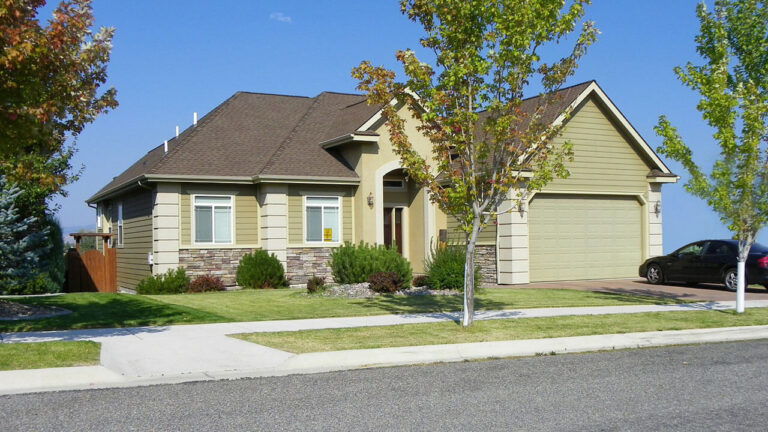
So, you finally spotted it. That one garage door on your block that makes you question your life choices every time you pull into your driveway. Maybe yours has a dent that looks suspiciously like a bad parking job, or the spring snapped with a sound like a gunshot at 6 AM. Whatever brought you here, I get it. We have been in the garage door game long enough to know that most folks only think about this hunk of metal and wood when it stops working. That is exactly why we need to chat.
From a business standpoint, I have seen it all. I have watched a homeowner spend three hours trying to fix a simple opener issue with a butter knife and a YouTube tutorial. Spoiler alert: it did not end well. We at Trenton Garage Doors have been the cleanup crew for those DIY disasters more times than I can count. But here is the thing—you do not need to be a professional to understand what makes a good door tick. You just need a little honest info, a few laughs, and someone to tell you when you are about to make a really expensive mistake.
Why Your Garage Door Hates You (And How to Make Peace)
Let us start with the elephant in the room. Your garage door is the largest moving object attached to your house. It weighs more than your car, it operates under extreme tension, and it sits there judging you silently every single day. Ever wonder why it groans like a haunted house prop when you open it? That is not a ghost. That is your torsion spring begging for retirement.
The Spring Situation: It is Not a DIY Project
I cannot stress this enough. A garage door spring stores enough energy to launch a bowling ball through your neighbor’s fence. If you think you can replace it with a crowbar and a prayer, you are wrong. I have seen the aftermath of someone trying to “save a few bucks” on a spring replacement. The result was a bent track, a cracked header, and a very expensive emergency call to us at Trenton Garage Doors at 11 PM on a Saturday.
Here is the reality: a spring replacement costs between $150 and $350 depending on the type and size. That is a bargain compared to the hospital bill for a broken arm. FYI, we carry springs for Clopay, Raynor, Amarr, and Wayne Dalton doors. So if you own one of those, you are in luck. If you own something obscure, you might need to look for the nearest distributor. But honestly, just call us. We already know where the closest parts are.
Opener Technology: From Basic to Brain Surgery
Remember when a garage door opener just went “click” and you were happy? Now, we have openers that connect to your Wi-Fi, play music, and probably judge your taste in podcasts. IMO, the smart features are actually useful—until your app crashes and you are locked out in the rain. Then it is just a $300 paperweight.
When we talk about installation, we always recommend belt-drive openers for quiet operation. Chain drives are cheaper, but they sound like a tractor starting up every time you use them. If you have a bedroom directly above the garage, do yourself a favor and spend the extra $50 on a belt drive. Your significant other will thank you when you come home at 2 AM.
The Dreaded Dent: Cosmetic or Structural?
Let us talk about that dent. You know the one. Maybe you backed into it with the lawnmower. Maybe a kid threw a baseball. Or maybe it just appeared one day like a garage door version of a shaving nick. Here is the rule: if the dent is on a single panel and the door still operates smoothly, you can probably leave it. It adds character, right?
But if the dent is deep enough to bend the track or warp the panel alignment, you are looking at a replacement soon. A bent panel puts stress on the entire system. Eventually, the springs will fail faster, the opener will work harder, and the whole thing will sound like a dying animal. At that point, the price of a new door starts looking pretty reasonable compared to the constant repairs.
When Should You Replace vs. Repair?
This is the million-dollar question. Here is a quick breakdown we use at the shop:
| Situation | Repair | Replace |
|---|---|---|
| Broken spring | Yes, replace it | Only if door is 20+ years old |
| Minor dent on one panel | Yes, swap the panel | Only if panel is discontinued |
| Opener motor burned out | Yes, new opener | No need for full door |
| Door is 15+ years old and sagging | Not worth it | New door saves energy and noise |
| Track is bent or rusted | Sometimes | Often cheaper to replace whole door |
| Insulation is crumbling | No | Yes, upgrade to insulated steel |
Notice a pattern? If the door itself is old and tired, throwing money at repairs is like putting a Band-Aid on a broken leg. We see this all the time. Someone spends $400 on a spring repair, then three months later the opener dies. Then the cable snaps. Then they finally call us for a full installation, and they have spent almost as much as a new door anyway.
The “Emergency” Scenario: When It All Goes Wrong
Picture this: you are late for work. You hit the opener. The door goes up three feet, makes a noise like a dying goose, and stops. You cannot leave. You cannot get your car out. You are now trapped in your own garage. This is not hypothetical—this happens to someone in Trenton at least once a week.
In an emergency, you need someone who can get there fast. Not the guy who says “I can be there next Tuesday.” You need the nearest technician who actually stocks parts. We keep common springs, cables, and openers on our trucks specifically for this reason. If you call us, we will have a tech at your house before you finish your third cup of coffee. And no, we do not charge extra for sweat :/
The Big Brands: Who Actually Makes a Good Door?
Let me save you some research time. We install a lot of doors, and we have opinions. Strong ones.
- Clopay: Solid mid-range. Great insulation options. Their Coachman series looks fantastic if you have a traditional home. We install a ton of these.
- Raynor: Overbuilt and expensive. If you plan to live in your house for 30 years, this is the one. Their warranty is legit.
- Amarr: Good value. Their Oak Summit line is popular for a reason. Not the flashiest, but reliable.
- Wayne Dalton: Hit or miss. Their older models had issues with the cables. The newer ones are better, but we see more repair calls on these than the others.
If you ask me, I would pick Clopay for the average homeowner. The cost is fair, the quality is consistent, and the parts are easy to find. But if you want something that will outlast your mortgage, go Raynor. Just be ready to pay for it.
Installation: Why You Should Not Trust Your Cousin Vinny
I love a good family favor as much as the next person. But when it comes to installation, please do not let your cousin who “knows a thing or two about tools” handle it. Garage door installation requires precise measurements, proper spring tension, and safety knowledge that comes from experience. One wrong move and the door can fall off the track, crush your car, or worse.
We have literally rebuilt installations that were done by “handymen” who used the wrong size track and left the door so crooked it looked like a funhouse mirror. That is not a deal—that is a liability. When you hire Trenton Garage Doors, we do it right the first time. We measure twice, we use the right hardware, and we test everything before we leave. And if something goes wrong later, we are still nearby.
How to Pick the Right Opener
Here is a quick list of what matters:
- Horsepower: 1/2 HP is fine for a single-car door. 3/4 HP or 1 HP for double doors or heavy insulated ones.
- Drive type: Belt drive for quiet, chain drive for budget, screw drive for durability in extreme weather.
- Smart features: Nice to have, but do not let it be the deciding factor. The app will eventually need an update. The motor is what matters.
- Battery backup: Get this. If the power goes out, you are not stuck.
We sell openers from LiftMaster and Chamberlain mostly. They are reliable, parts are everywhere, and they play nice with most brands of doors. Do not overthink this.
The “I Can Fix It Myself” Trap
Look, I respect the DIY spirit. I really do. But there are some things you should just not touch. Lubricating the rollers? Fine. Tightening a loose bolt? Go for it. Trying to adjust the spring tension? Stop. Put the wrench down. Walk away.
I have a customer who tried to replace his own cables. He ended up with a door that was so out of balance it slammed shut like a guillotine. He called us, embarrassed, and we fixed it in 20 minutes. The price for that fix was less than his deductible would have been if it had crushed his dog. So, know your limits.
Final Thoughts: The Door You Deserve
At the end of the day, your garage door is a workhorse. It opens and closes thousands of times a year, it keeps the weather out, and it probably adds more curb appeal than your front door. Treat it with a little respect, and it will last. Ignore it, and it will bite you at the worst possible moment.
If you are in Trenton and your door is acting up, or if you just want to upgrade to something that does not look like it belongs in a 1980s horror movie, give us a shout. Trenton Garage Doors is the closest team that actually cares about doing the job right. We answer the phone, we show up on time, and we do not upsell you on stuff you do not need. Unless you really want that Wi-Fi-enabled opener with the built-in camera. In that case, we will happily take your money :/
Common Questions We Actually Get
Q: How long does a garage door spring typically last?
A: Most torsion springs last about 10,000 cycles. If you open and close your door four times a day, that is roughly seven years. After that, expect it to snap. If you hear a loud bang and the door suddenly feels heavy, that is your spring saying goodbye. Call us before you try to lift it manually—those things are dangerous.
Q: Can I just replace one panel instead of the whole door?
A: Sometimes yes, if the manufacturer still makes that exact panel and the color matches. But here is the catch: if your door is more than 10 years old, the paint will likely fade differently. You will end up with one shiny new panel surrounded by faded ones. It looks worse than the dent did. In most cases, we recommend replacing the whole door for a uniform look and better insulation.
Q: Is an insulated door worth the extra cost?
A: Absolutely, if your garage is attached to your house. An insulated door keeps the temperature stable, which means your heating and cooling system works less. IMO, it is one of the best upgrades you can make. The cost difference is usually $200 to $500 depending on the door, and you will save that in energy bills within two years. Plus, it makes the door quieter and stronger. Win-win.
