
Table of Contents
ToggleEver stare at your garage door and have a full-blown, one-sided conversation with it? We get it. One day it’s humming along like a champ, and the next, it’s making a sound that would make a haunted house sound engineer proud. Choosing a new garage door isn’t just about curb appeal—it’s about ending that stressful relationship with the giant moving part of your house. Let’s walk through this together, because honestly, between insulation ratings, window options, and spring types, it’s easy to feel overwhelmed.
The Great Garage Door Face-Off: Steel vs. Wood vs. Aluminum
First things first, we need to pick our material. This choice dictates everything: look, durability, maintenance, and yes, the cost. Each has its personality, for better or worse.
Steel Doors: The Reliable Workhorse
We install more steel doors than any other type here in Trenton, and for good reason. They’re the pragmatic choice.
- Durability: Modern steel doors resist dents better than older models (though a rogue basketball or a determined hail storm can still leave a dent).
- Low Maintenance: A quick hose-down is usually all it needs. No staining or painting every few years.
- Insulation: You can get fantastic insulation with steel, which is a big deal for our NJ winters and summers. A well-insulated door is a friend to your wallet and your home’s comfort.
- Value: Typically, steel offers the best bang for your buck. The price point is attractive for the performance you get.
Wood Doors: The High-Maintenance Beauty
Ah, wood. It looks incredible—warm, rich, and classic. But IMO, it’s like owning a classic car. It requires love.
- Aesthetic: Unbeatable. It adds serious character and cost.
- Upkeep: This is the big one. You’re looking at regular sealing, staining, or painting to protect it from our humid summers and freezing winters. If you’re not into maintenance, this isn’t your soulmate door.
- Weight & Hardware: Wood is heavy. That means your opener and spring system need to be robust. We always factor this into any installation or replacement quote.
Aluminum Doors: The Modern Minimalist
These are less common for full residential doors but pop up a lot in contemporary designs or as full-view doors with glass panels.
- Rust-Proof: Great for coastal areas, but they show every little ding.
- Lightweight: Easier on the opener system.
- Modern Look: Perfect for a specific architectural style.
So, which one wins? For 80% of homes in our area, we recommend a high-quality, insulated steel door from brands like Clopay or Amarr. It handles our climate, looks great for decades with minimal fuss, and keeps the price reasonable. Wood is for the true enthusiast ready for the commitment.
Beyond the Panel: Features You’ll Actually Care About
Okay, material is picked. Now, let’s talk about the stuff that makes your life easier (or harder if you ignore it).
The Insulation R-Value Saga
“R-value” sounds like a boring science term, but listen up: this is your secret weapon for energy bills. If your garage is attached to your house, or you use it as a workspace, this matters—a lot.
- A non-insulated door is basically a giant, thin wall facing the elements. Brrr.
- Polyurethane insulation (foamed-in-place) is king. It provides a higher R-value per inch than polystyrene (the glued-in board style) and makes the door more rigid and quieter. Trust us on this one.
Springs: The Heart of the Operation
This is the part that does the heavy lifting. Literally. There are two main types:
- Torsion Springs: Mounted horizontally above the door. They last longer, are safer, and provide a smoother operation. This is what we install 99% of the time at Trenton Garage Doors.
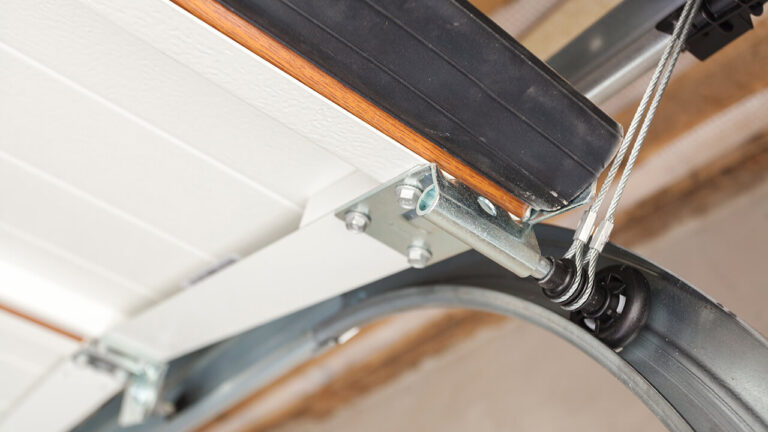
- Extension Springs: Run along the horizontal tracks. They’re an older style, wear out faster, and are more dangerous if they fail.
A broken spring is the most common emergency call we get. FYI, never try to fix this yourself. It’s incredibly dangerous. That’s a job for the pros.
Openers: The Brain of the Bunch
The motor matters, but the features matter more these days.
- Belt Drive: The quietest and smoothest. Worth every extra penny if your garage is under a bedroom.
- Chain Drive: Noisy but durable and cost-effective. The classic.
- Smart Features: This is non-negotiable now. Being able to check if you closed the door from your phone, or getting an alert if it opens unexpectedly, is a game-changer for peace of mind. Brands like LiftMaster (Chamberlain) dominate here.
Let’s Get Real: A Quick Comparison Table
We see a lot of doors. Here’s a brutally honest, side-by-side look from our day-to-day experience:
| Feature | Steel Door | Wood Door | Aluminum/Glass Door |
|---|---|---|---|
| Upfront Cost | Moderate (Best Value) | High | Moderate to High |
| Long-Term Maintenance | Very Low | High (Annual Care) | Low (Glass Cleaning) |
| Durability in Trenton Climate | Excellent | Good (With Upkeep) | Good (Can Dent) |
| Insulation Potential | Excellent (Best Option) | Good | Poor to Moderate |
| Typical Lifespan | Long (20+ Years) | Long (With Care) | Long |
| Our “For Most People” Verdict | Top Recommendation | Niche Pick | Style-Specific Pick |
The Installation: Why “Nearby” and “Cheapest” Can Cost You
Here’s where we get on our soapbox for a second. You can buy the best Raynor or Wayne Dalton door on the planet, but if the installation is botched, you’ve bought an expensive headache.
A proper installation ensures:
- Safety: Correct spring tension and secure hardware.
- Longevity: Perfect balance and alignment so nothing wears out prematurely.
- Performance: Smooth, quiet operation.
Choosing the nearest handyman or the closest big-box store installer based on the lowest price often leads to callbacks. We’ve fixed more “budget” jobs than we can count. When you’re looking for the closest expert, look for the one with the proven local reputation, like, ahem, your friends at Trenton Garage Doors. It saves money and stress in the long run.
Your Top Garage Door Questions, Answered
We hear these all day, every day.
1. “How long should a garage door last?”
A quality door system, with proper maintenance, should last 20-30 years. The moving parts (springs, rollers, opener) have shorter lifespans. Springs, for example, last 7-15 years depending on use. The opener might last 10-15 years. Think of it like a car—you’ll do tires and brakes long before the body rusts out.
2. “Can I just replace one panel if it’s damaged?”
Sometimes, but rarely is it the best idea. Matching the color and style of an older door is tough. The cost of a single-panel repair plus labor often gets you halfway to a new, better-looking door. And if the damage is from impact, you should always have a pro check the alignment and hardware anyway.
3. “What constitutes a real garage door emergency?”
Anything that leaves your home insecure or the door in a dangerous position. A door stuck wide open, a broken spring that has the door crashed on your car, or a door that violently reverses or falls—these are emergency situations. A slow door or a minor noise usually isn’t. If you’re ever unsure, just give us a call at Trenton Garage Doors. We’d rather you be safe and get honest advice.
So, there you have it. Choosing a garage door is part practical home upgrade, part personal style statement. It’s about finding that sweet spot between what looks great on your house and what works great for your life in Trenton. Do your homework, think long-term, and for the love of all that is holy, invest in a great installation. Your future self, cozy and not listening to horrible grinding noises, will thank you. And if you’re ever in doubt, you know who to talk to 🙂
